

To Look West, Connor Koppin’s new multi-movement work for choir, string quartet, and piano, received its world premiere with Evergreen Ensemble on May 30, 2026 in Seattle, WA, and May 31, 2026, in Lynnwood, WA.
Rooted in the landscapes, memory, and literary voices of the Pacific Northwest, this work speaks directly to who we are as an ensemble and the place we call home. We are especially excited that To Look West is now slated to become Evergreen Ensemble’s first official recording project.
If this premiere moved you, or if you believe in preserving and sharing new choral music rooted in our region, we invite you to consider making a donation to help bring this recording to life.

Approximately half of the text is drawn from journals and writings of early explorers and scientists, forming a kind of precise catalog and vivid travelogue of the region. These include the work of David Douglas, whose botanical discoveries introduced hundreds of species (including the Douglas fir) to the wider world, and David Thompson, whose mapping of vast portions of North America earned him the name “Koo-Koo-Sint,” or “the Stargazer,” among Indigenous communities.
This historical foundation is set alongside the richly descriptive poetry of Ella Rhoads Higginson, the first Poet Laureate of Washington State. “One of the things that struck me about Higginson’s poetry,” Koppin says, “is that it feels strangely modern. The way she expresses things doesn’t feel dated, it feels almost prescient.” That quality becomes a kind of bridge across time, connecting past and present experiences of the region’s landscape.
For Artistic Director David Hendrix, the local nature of the texts gives the work particular resonance: “We get to sing this piece first, in the very place it’s about. These are texts written about landscapes we know—places that, in some cases, are just down the road. That connection to the natural environment, and to the beauty of this region, is something many of our singers share. It makes the piece feel especially close to home.”
The Texts
-
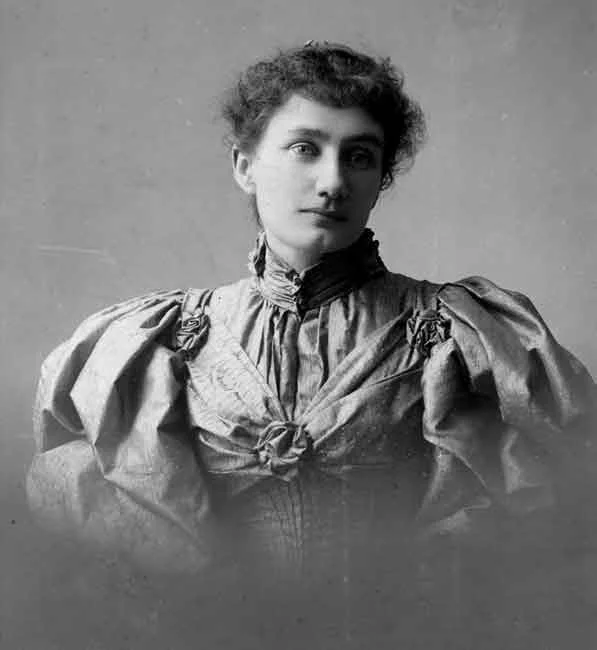
Ella Rhoads Higginson was a central literary voice of the early Pacific Northwest and the first Poet Laureate of Washington State. Born in Kansas and raised in Oregon, she later settled in Bellingham, where she became known for writing that captured both the beauty and character of the region.
Her work spans poetry, fiction, and travel writing, with a body of output that includes hundreds of poems and short stories, as well as the widely read novel Mariella, of Out West. Her writing gained national recognition through major literary contests and publications, and her poem “Four-Leaf Clover” became especially well known. In her travel writing, she introduced broader audiences to the landscapes of the Northwest and Alaska with a vivid, descriptive voice.
Beyond her literary work, Higginson played an active role in shaping the cultural life of her community. She helped establish Bellingham’s first public library and supported civic efforts including women’s political participation. Today, her legacy endures not only in her writing, but in the way she helped articulate a sense of place for the region—one that continues to resonate in both memory and imagination.
-
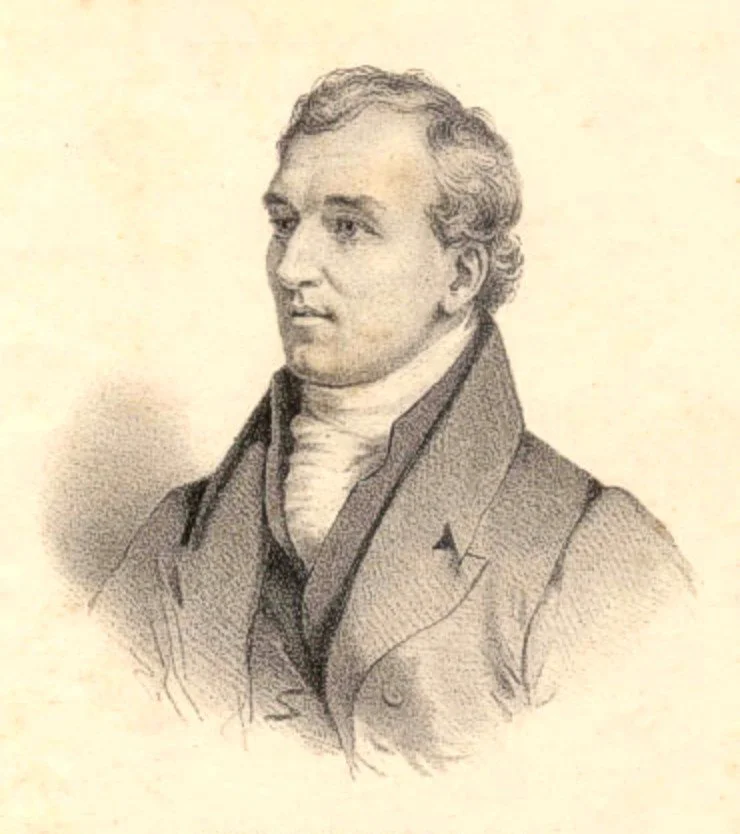
David Douglas was a Scottish botanist whose work helped shape the world’s understanding of the Pacific Northwest in the early 19th century. After apprenticing at Scone Palace and studying under William Jackson Hooker, he was sent by the Royal Horticultural Society on expeditions to North America. His second journey (1824–1827) proved especially significant, taking him through the Columbia River region and into terrain few Europeans had yet explored, including early ascents into the surrounding mountains.
Douglas’s legacy is most visible in the hundreds of plant species he introduced to the wider botanical world, including the tree that now bears his name, the Douglas fir. He also identified and exported seeds for species such as Sitka spruce, ponderosa pine, and the California poppy—plants that would go on to reshape landscapes far beyond their native range.
Alongside his fieldwork, Douglas was a careful and observant writer. His journals and correspondence serve both as scientific record and vivid travel narrative, documenting the landscapes he encountered, the physical demands of his journeys, and his interactions with Indigenous communities. Taken together, these writings remain an important window into the natural and human world of the early Pacific Northwest, preserved from a life that ended unexpectedly in Hawai‘i at the age of thirty-five.
-
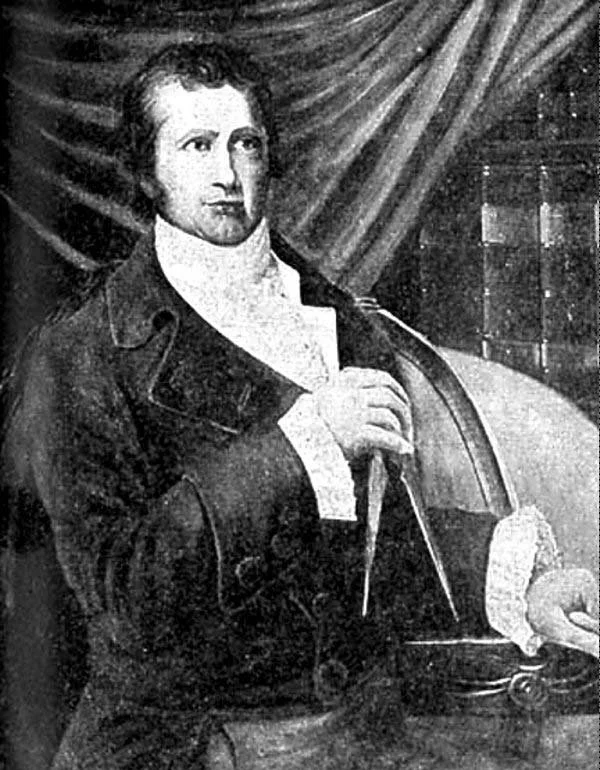
David Thompson was one of the most influential cartographers in North American history, mapping nearly one-fifth of the continent with remarkable precision. His most significant work in the Pacific Northwest took place between 1807 and 1812, when he established trade routes across the Rocky Mountains and became the first European to navigate the Columbia River from its headwaters to the Pacific Ocean.
Thompson’s accuracy was rooted in his deep knowledge of astronomy and mathematics. Rather than relying solely on landmarks, he navigated using a sextant and careful observation of the sun, moon, and stars—a practice that led some Indigenous communities to call him “Koo-Koo-Sint,” or “the Stargazer.” His measurements were so exact that many of his maps remained in use for generations.
In his later years, Thompson worked to assemble his extensive field notes into a unified account of his travels. Though he did not complete the project in his lifetime, his writings were eventually published as David Thompson’s Narrative, and are valued today for their detailed, almost pictorial descriptions of landscape, culture, and experience. Together, his maps and journals offer a lasting record of a region still in the process of being understood.
Musically, To Look West traces the arc of a single day, from dawn through noon into twilight, mirroring the shifting relationship between memory and the physical world. The instrumental writing plays a central role in shaping that environment. “If I’m writing about nature,” Koppin explains, “a string quartet feels like the most representative group… there’s a tremendous range of color and contrast within those instruments.” In this setting, the resonance of strings and piano evokes the landscape itself, while the choir gives voice to the human presence within it.
Koppin approaches the work with a distinctive sensibility shaped by an unconventional path. After early years in garage bands, he taught himself piano and developed his voice through commissions and competitions. His influences range from the rhythmic clarity of John Adams and Steve Reich to the spiritual intensity of Arvo Pärt. At the center of his approach is a commitment to writing music that rewards the performers—works that are demanding, but ultimately satisfying to sing.
“What draws me again and again to Connor’s music,” Hendrix says, “is that it challenges singers in a meaningful way. It’s not difficult for its own sake. There’s a real sense of reward in it—a feeling that the effort leads somewhere, and that the experience of singing it is genuinely enjoyable.”
The Music
With To Look West, Evergreen Ensemble presents not only the premiere of a major new work, but an invitation to listen more closely: to the landscapes around us, to the voices that came before, and to the ways memory and place continue to shape who we are.

Composer
Connor Koppin
Connor Koppin is an award-winning composer and conductor of choral music, known for his exceptional craftsmanship and the harmonic and melodic beauty of his work. His music is often centered on relevant real-world themes such as resiliency, societal strife and reconciliation, and climate advocacy. Additionally, many of his compositions are aimed at stichting together antiquity and modernity through the marriage of new and old, placing an emphasis on the universality of living, and the human experience. He is a 2025 finalist for The American Prize in Choral Composition (short works). Additionally, Koppin is slated to serve as Composer-in-Residence at Carnegie Hall in association with National Concerts in 2026. Koppin wrote his first large-scale work, “I Call Your Name” in 2019, alongside poet Brian Newhouse who crafted the libretto.
Among his accolades are awards from the Young New Yorker’s Chorus Young Composer Competition and the Inaugural Capital Hearings Young Composers Competition. His music has been featured on All-State and festival programs in states such as Texas, Georgia, Florida, Illinois, Iowa, Minnesota, Arkansas, and California. Koppin’s works have been performed at renowned venues like Carnegie Hall and The Kennedy Center and showcased at both regional and national conferences of the American Choral Directors Association (ACDA). He currently has two works—There Will Come Soft Rains and I Found Night—featured on the forthcoming album Sun, Moon, Stars, Rain by the acclaimed Phoenix Chorale.
Koppin holds a Doctor of Musical Arts in Choral Conducting from Michigan State University, where he studied under David Rayl, Sandra Snow, and Jonathan Reed. He began his compositional journey at Wartburg College, where he sang with Dr. Lee Nelson and the Wartburg Choir. His works are widely published by leading music publishers, including Oxford University Press, Walton Music, Hal Leonard, Santa Barbara Music Publishing, G. Schirmer, and Colla Voce Music Publishing. Regularly performed by choirs across the globe, his compositions have earned him a place as a significant voice in contemporary choral music.
For more information, to listen to his works, or to contact him, please visit connorkoppin.com.